The ICARUS family.
Air defence crews are training against the wrong thing. The threat that actually arrives is cheap, numerous and arrives all at once — and that is the one thing conventional target drones cannot replicate, because at half a million pounds a shot nobody flies twenty of them in a morning.
The number that matters is cost per presentation to the crew, and everything about ICARUS is built around driving it down: a low unit cost, catapult launch with no runway or ground infrastructure, belly-landing recovery, and a reusable airframe. The same aircraft comes back and does it again. A target does not need to be the threat — it needs to present the same engagement problem: the right size, speed band, signature and trajectory.
ICARUS-1 — small target drone.
The piston-powered delta one-way attack drone, replicated in planform, speed, and acoustic and infrared signature. Flown, with datasheet PI-TGT-2025-001 available on request. Petrol variant is ICARUS-1p.
| Configuration | Tailless delta, elevon control |
|---|---|
| Span | 1.3 m |
| Length | 1.8 m overall |
| Launch mass | 11 kg electric / 15–16 kg petrol |
| Powerplant | Electric (12S) or 38 cc two-stroke petrol pusher |
| Cruise speed | 140–180 km/h |
| Dash speed | 200 km/h |
| Endurance | ~50 min electric / 2 h+ petrol |
| Range | Up to 100 km on a single electric charge |
| Launch | Pneumatic catapult, no runway required |
| Recovery | Belly landing, reusable |
| Construction | Moulded composite sandwich skin |
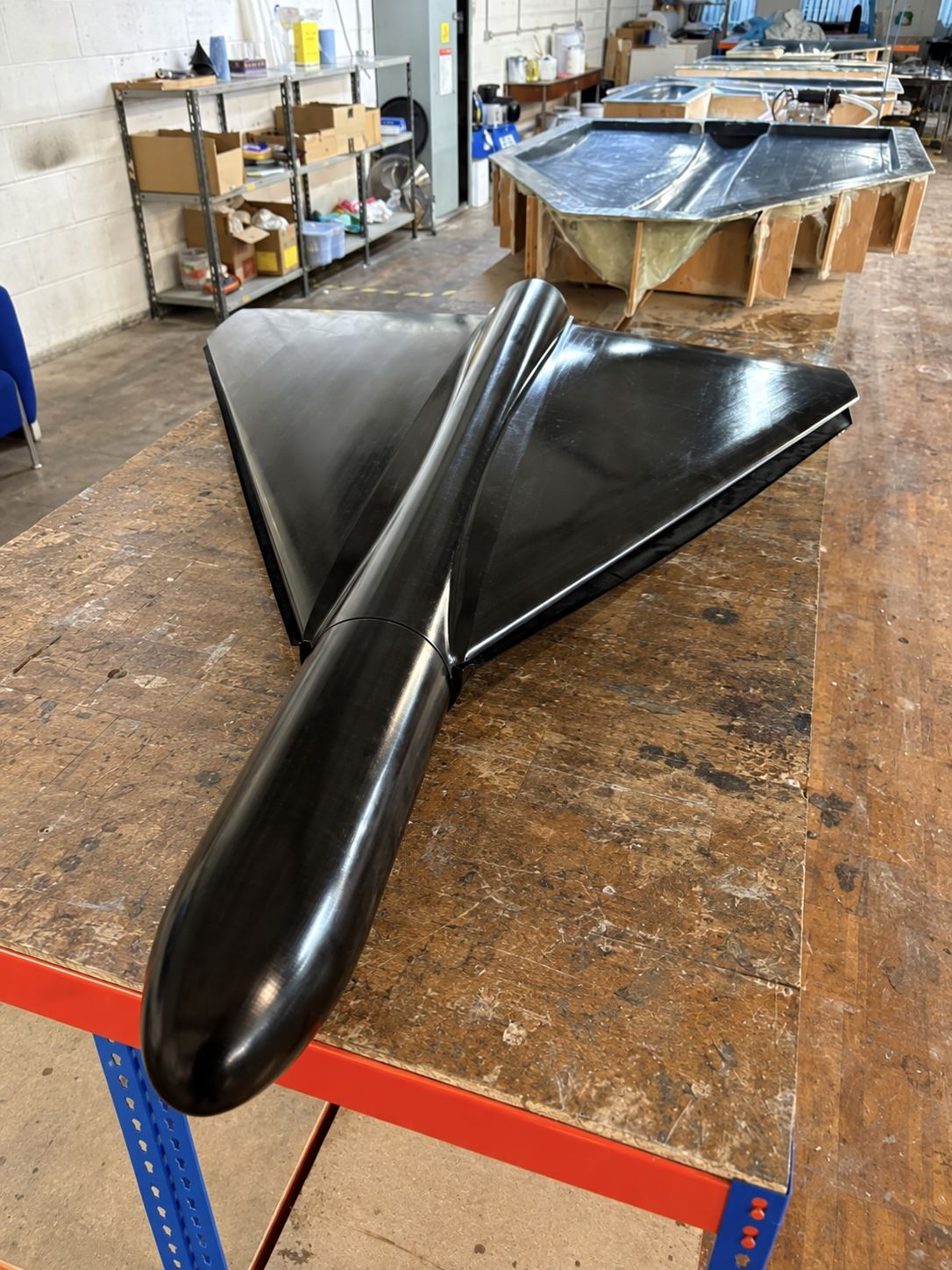
ICARUS-2P — medium target drone, petrol.
Same family, larger envelope. A full-scale composite target supplied ready to fly, with Purser flight controller, datalink, ground control station and launcher. Datasheet PI-2026-AF002 available on request.
| Configuration | Tailless delta, cylindrical centre fuselage, pusher |
|---|---|
| Wingspan / length | 2.56 m / 3.55 m |
| Take-off mass | 48–60 kg |
| Engine | 180 cc two-stroke petrol, approx. 20 hp |
| Fuel | 20 L |
| Cruise speed | Up to 180 km/h |
| Never-exceed speed | 200 km/h |
| Datalink | 868 MHz command and telemetry, 40 km tested; SATCOM option |
| Navigation | Autonomous waypoint missions |
| Launch | Purser free-piston pneumatic launcher |
| Recovery | Belly landing; parachute option |
| Airframe life | 50 launch / recovery cycles (design target) |
ICARUS-2E — medium target drone, electric.
The ICARUS-2 airframe with electric propulsion. Same launcher, ground station and recovery, for ranges and missions where a quieter, cleaner powerplant suits better. Full specification available on request.
| Configuration | Tailless delta, cylindrical centre fuselage, pusher |
|---|---|
| Wingspan / length | 2.56 m / 3.55 m |
| Powerplant | Electric |
| Cruise speed | Up to 180 km/h |
| Never-exceed speed | 200 km/h |
| Datalink | 868 MHz command and telemetry, 40 km tested; SATCOM option |
| Navigation | Autonomous waypoint missions |
| Launch | Purser free-piston pneumatic launcher |
| Recovery | Belly landing; parachute option |
| Airframe life | 50 launch / recovery cycles (design target) |
ICARUS-3 — high-speed jet target.
Jet-powered one-way attack drones are in service now, and very little in the target market currently represents them. ICARUS-3 closes that gap. Datasheet PI-ICR1J-2026-001 available on request.
| Configuration | Tailless delta, dorsal intake |
|---|---|
| Span | 1.3 m |
| Weight | 25 kg |
| Powerplant | 235 N class turbojet |
| Speed | 450 km/h+ |
| Launch | Pneumatic catapult |
| Recovery | Belly landing |
A whole capability, not just an aircraft.
Launcher, ground control station and field maintenance kit ship together. Units operate the system themselves rather than buying a target service and waiting for a contractor's diary.
PL-1 launcher
Pneumatic catapult, self-contained petrol compressor — no site power, no prepared surface, breaks down for vehicle transport.
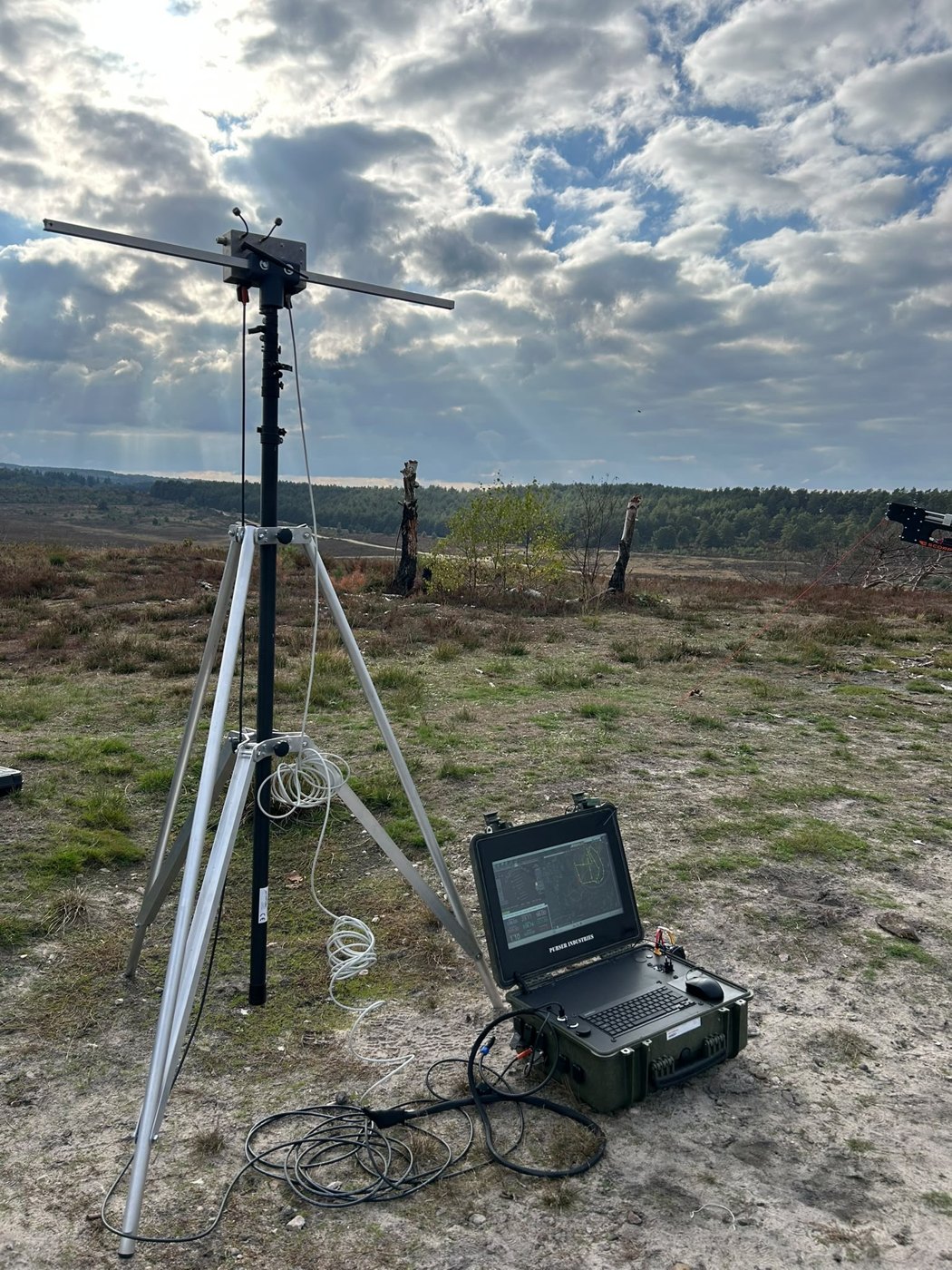
Ground control & field kit
Ruggedised ground control station in a sealed hard case: mission planning, live telemetry and FPV video, extendable mast antenna, 12 V vehicle or internal battery power. Ships with a field maintenance kit — everything needed to operate ICARUS without outside support.